Koalitions- | Bündnisschach
"Coalition chess is played by four persons. The board has 10 x 10 squares. Yellow and Black are greater powers. Red and Green are lesser powers." (Arnold Schönberg)
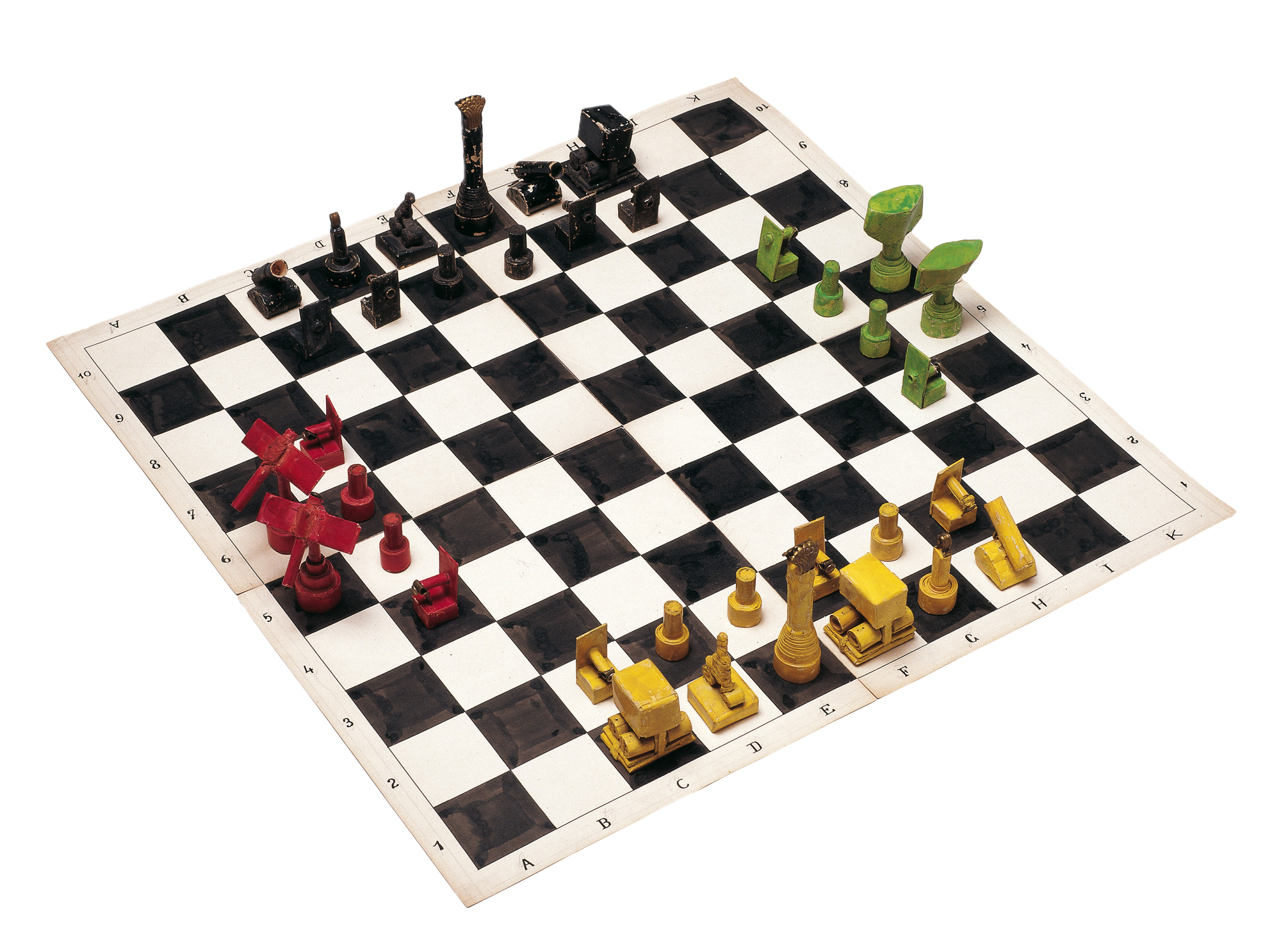
Schönberg developed his Coalition Chess in the first half of the 1920s. The set of rules exist as a draft with levels of power that are subtly differentiated yet still balanced and with extremely unconventional and original elements whose construction required a substantial amount of work.
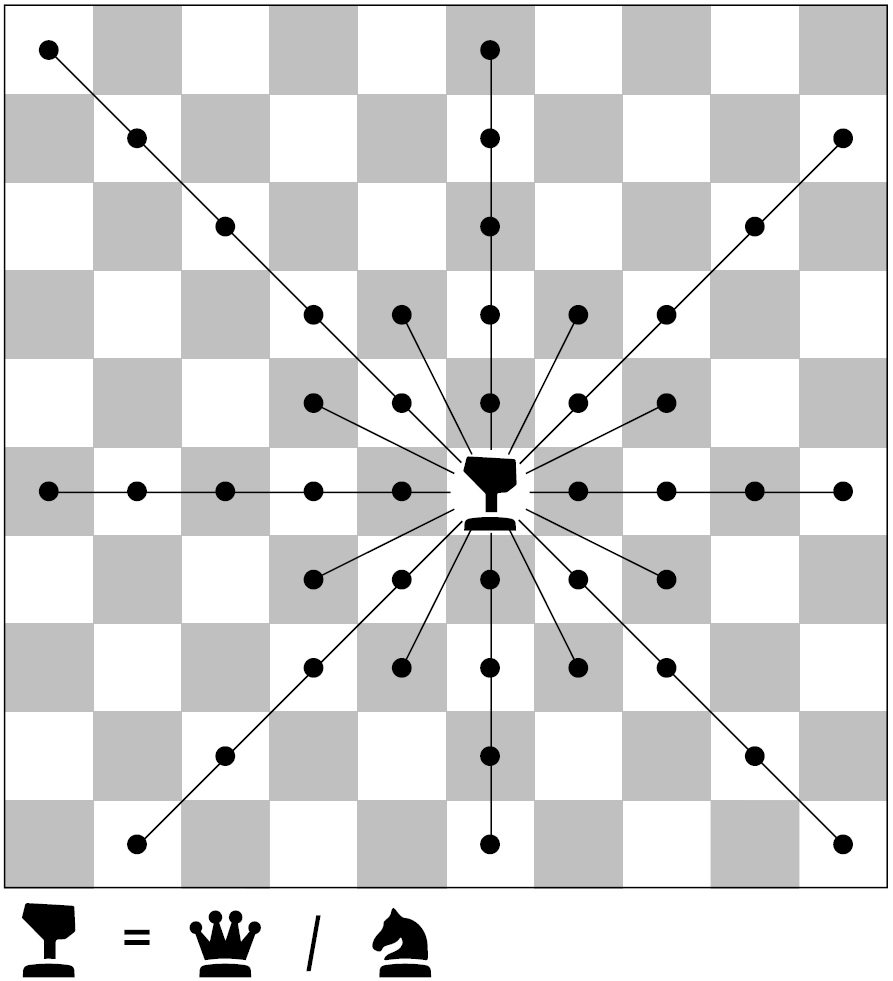
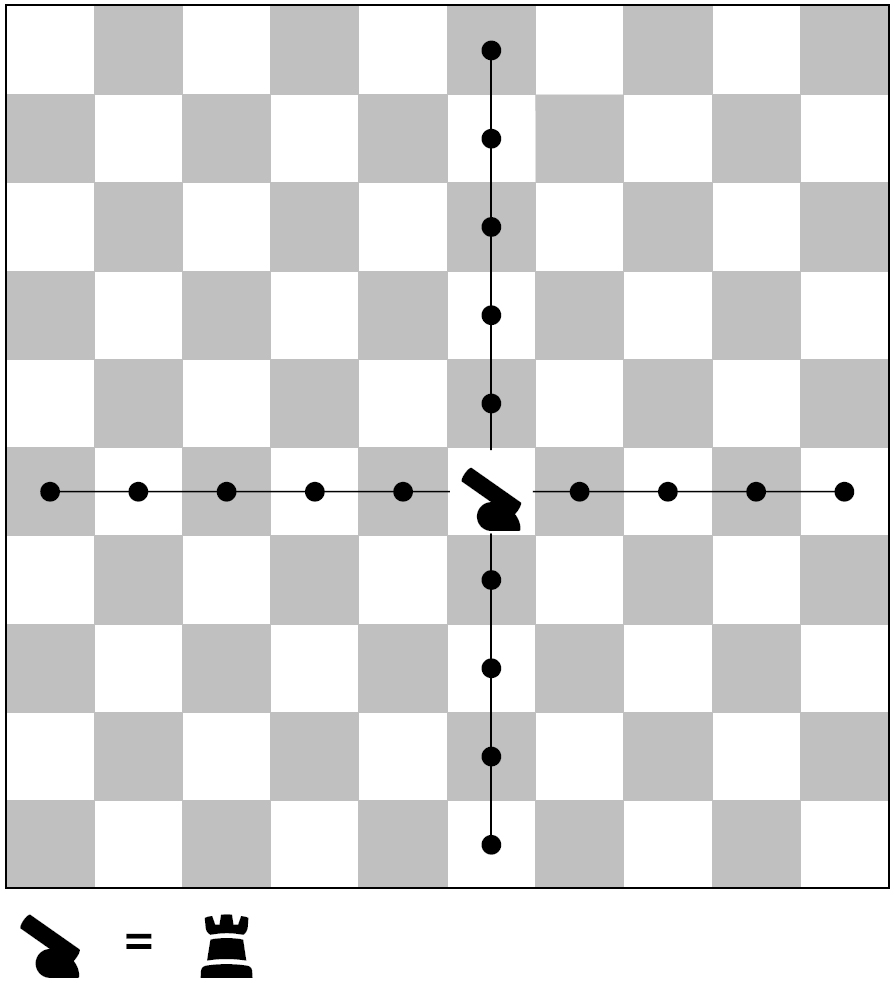
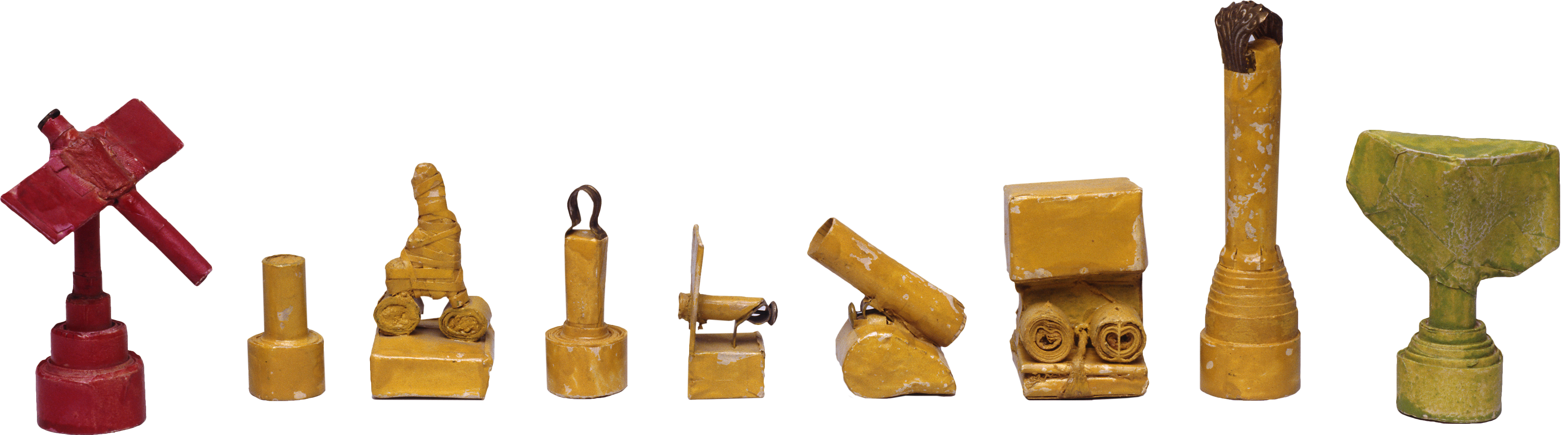
Schönberg’s chess variant is an expansion of the traditional game. There are four players, two “greater powers” (Yellow, Black) and two “lesser powers” (Green, Red) who can form coalitions during the first three rounds. Instead of the six different pieces in the traditional game of chess, “Coalition Chess” has pieces with nine different types of move. Their range of moves is either taken from traditional chess or, in the case of the three new pieces, two pieces from traditional chess are merged to form one new piece.
Schönberg’s pieces remain figurative, they symbolise possibly the original motif of the army in modern form. The pieces, their names and their distribution correspond to Schönberg’s experiences with the war machinery of the First World War. Red symbolises the air force (Planes), Green the navy (Submarines), the greater powers Yellow and Black are equipped with the military arsenal of the land forces.
However, the version designed by Schönberg – and this is the game’s peculiarity – is not a war game and therefore not just one of innumerable variants in the history of chess. In this agonal “fight,” the players are involved in demanding diplomatic relations and negotiations between potential coalition partners.